Standing & Seated Balances Eka pada family
Vatayanasana
Horse pose
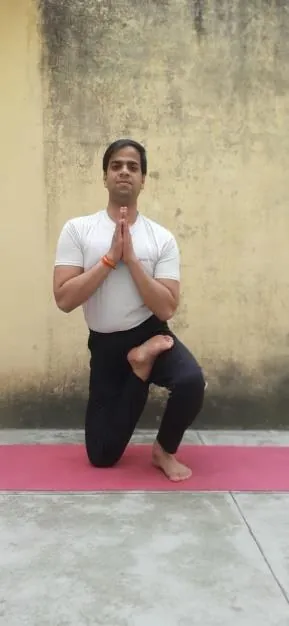
An intermediate posture of Ashtanga yoga that asks for a great deal of flexibility. Vataya means "horse".
FamilyStanding & Seated Balances
LevelIntermediate (YCB Level 2)
AwarenessSwadhisthana chakra
Technique
- Stand with the feet together and fix the gaze.
- Shift the weight to the right leg and place the left foot on the right thigh in half lotus.
- Hold the left ankle until steady, then join the palms in front of the chest.
- Exhale, bend the standing knee and lower the body, keeping the balance, until the left knee rests on the floor beside the right foot.
- Hold briefly, then rise to the starting position.
- Release the leg, relax standing with the eyes closed and repeat on the other side.
Awareness
Physically on the balance, especially while the weight moves, and on the surge of strength in the legs when rising; gradually on Swadhisthana chakra.
What it gives
- Strengthens the legs and the knee joints.
- Traditionally associated with the practice of brahmacharya (conservation of energy).
Precautions
- A strenuous practice. Avoid with sciatica, slipped disc, a weak back, hip, knee or ankle, hernia, heart problems or high blood pressure.
Learn it with Acharya Lokesh
Intermediate postures are safest when a teacher watches you. Book a free trial session at home in Delhi or online, or take the illustrated guide home.
Text from Acharya Lokesh's handbook Yogasana for Intermediates (Agastya Yoga School, 2022), edited for clarity. General information about a traditional practice, not medical advice: if you have a health condition, are pregnant or recovering from surgery, ask your doctor first.