01
Assess first
Every journey starts with a trial session. Acharya Lokesh watches how you move and breathe, then builds a programme for you: never a one-size-fits-all class.
Acharya Lokesh teaches yoga the way he received it from his guru, Shri Amit Sharma: step by step, from the body to the breath to the mind. No instant yoga, no quick-fix fitness. It is written down in his handbook, built on the Yoga Certification Board Level 2 syllabus.
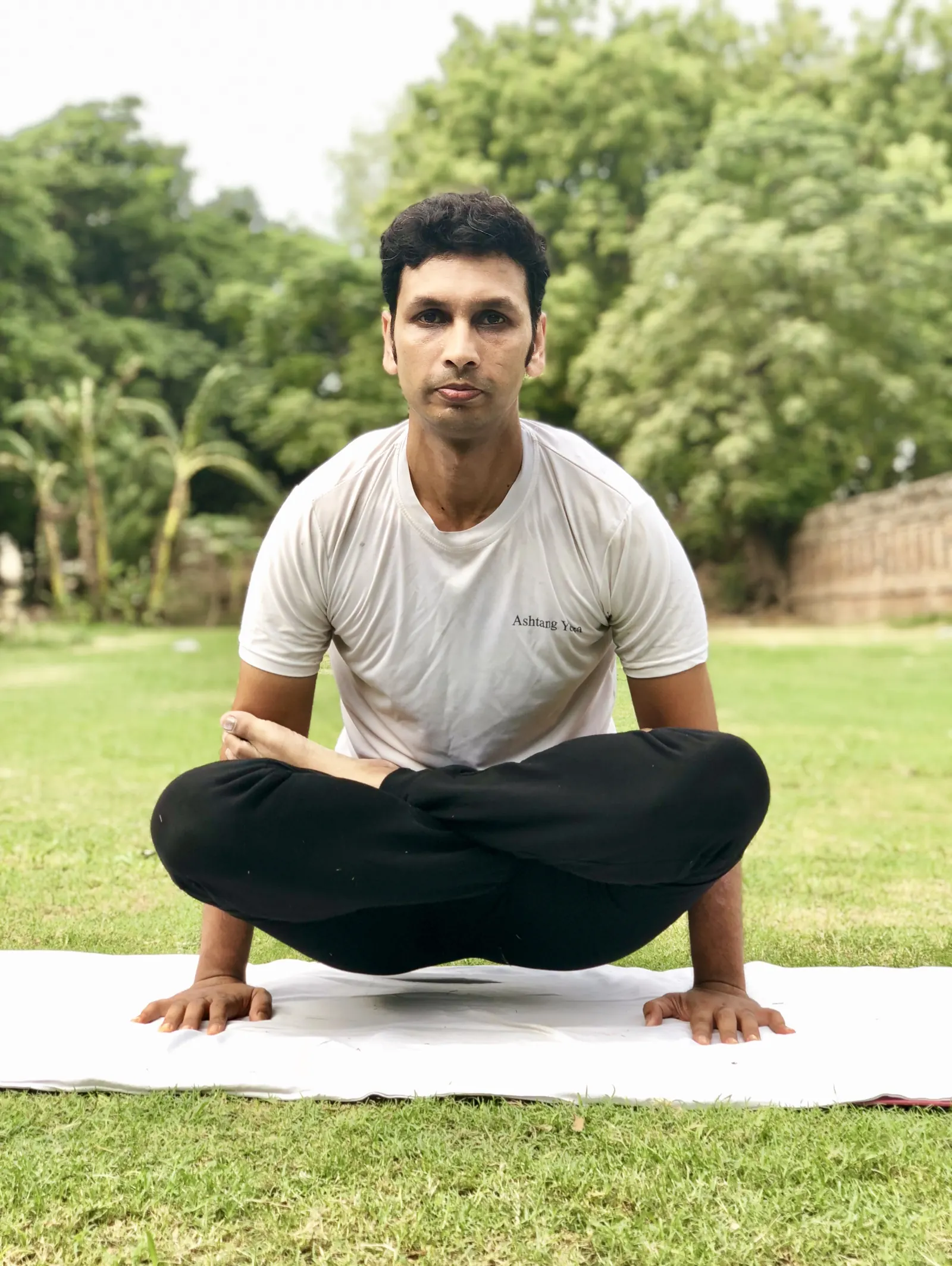
Prior to everything, asana is spoken of as the first part of hatha yoga. Having done asana, one gets steadiness of body and mind, freedom from disease and lightness of the limbs.Opening of the asana chapter of the handbook
Every journey starts with a trial session. Acharya Lokesh watches how you move and breathe, then builds a programme for you: never a one-size-fits-all class.
Lotus-based postures, forward bends, back bends, inversions, balances and arm balances, learned in order, each taught in four parts.
Shatkarma cleansing, then pranayama such as Nadi Shodhana, with the five pranas explained: the breath becomes the bridge between body and mind.
The five elements and the five sheaths, from the physical body to bliss: awareness moves from muscle, to breath, to chakra.
Technique, awareness, benefits, precautions. Here is one, exactly as in the handbook.
The tradition says a human being is wrapped in five sheaths, the Panchakosha. Practice at Agastya moves through them in order, from the body you can touch to the stillness you cannot.
The gross body, made of food, linked to the earth element.
02Between body and mind: the body of prana, with its five main pranas and five secondary ones.
03Mind, intellect and ego (the inner instrument).
04Discernment and higher knowledge.
05The innermost sheath, said to dwell in the cave of the heart, turned towards the inner world.
The Hatha Yoga Pradipika (1.15-16) names six things that destroy yoga and six that make it succeed. Read them before you practise: they decide more than flexibility.
Enthusiasm (Utsaha) is what makes it succeed.
Courage (Sahasa) is what makes it succeed.
Patience (Dhairya) is what makes it succeed.
Discernment, true knowledge (Tattva jnana) is what makes it succeed.
Unshakable faith (Nishchaya) is what makes it succeed.
Leaving aside worldly company (Janasanga parityaga) is what makes it succeed.
Each posture is taught the same way: the technique step by step, where to place the awareness, what it gives, and when not to do it. Open any one of them.
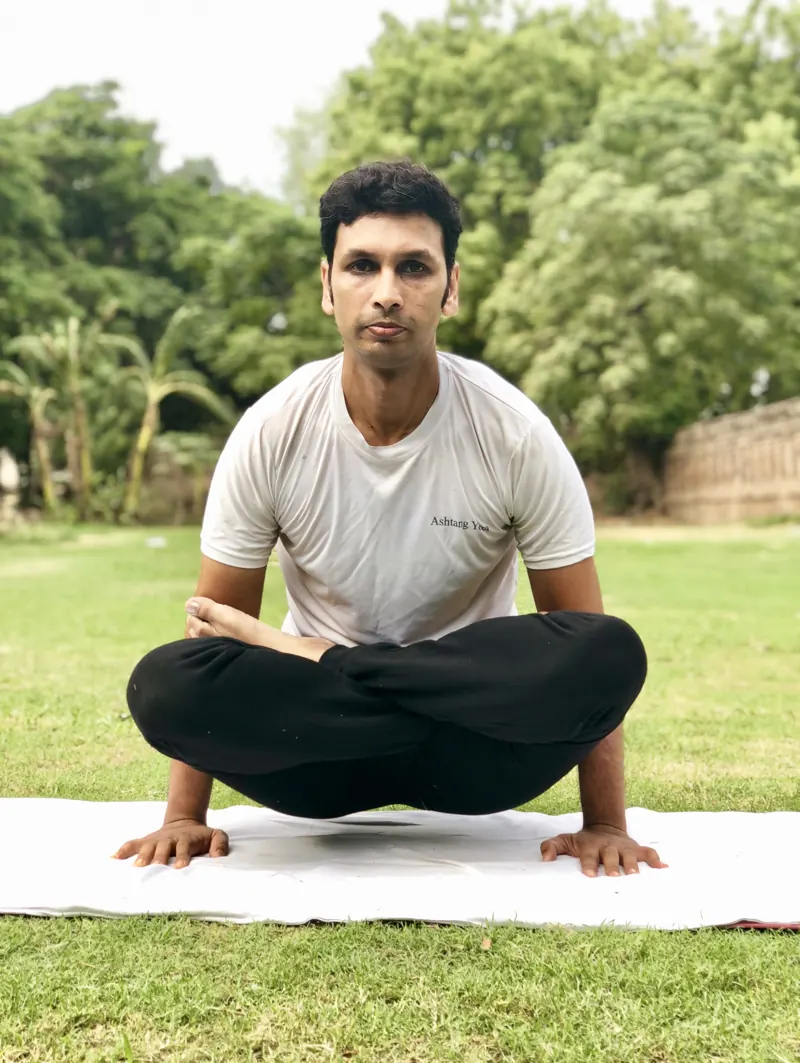
Padma is the lotus.
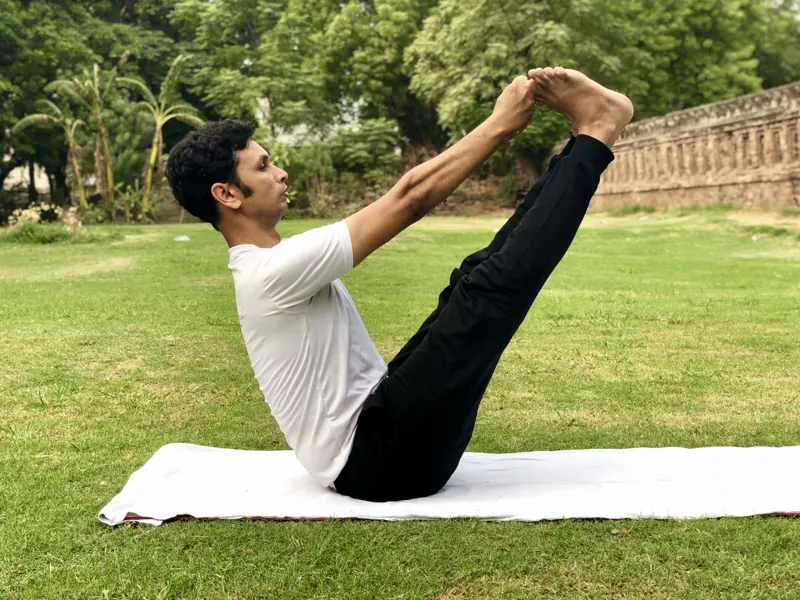
A forward bend gives a strong stretch to the back of the body.
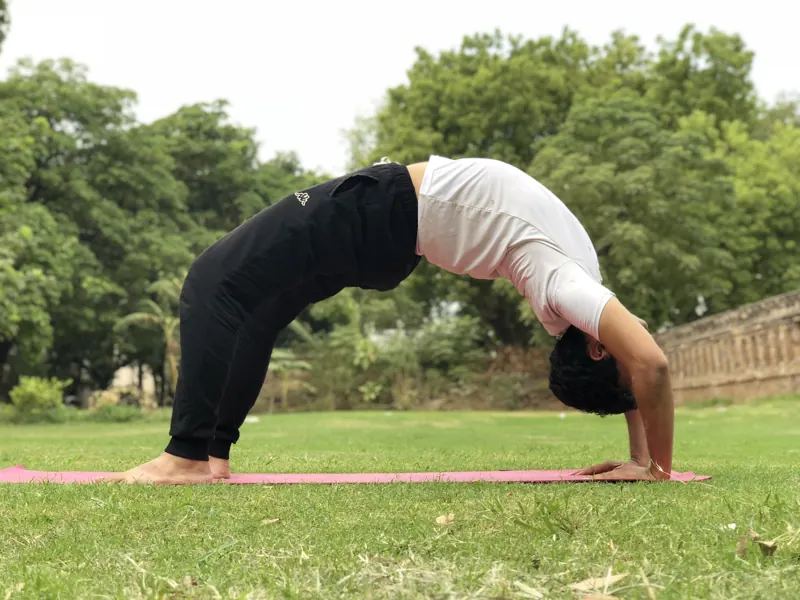
In a back bend the body arches backward, opening the front of the body, the chest and the breath..
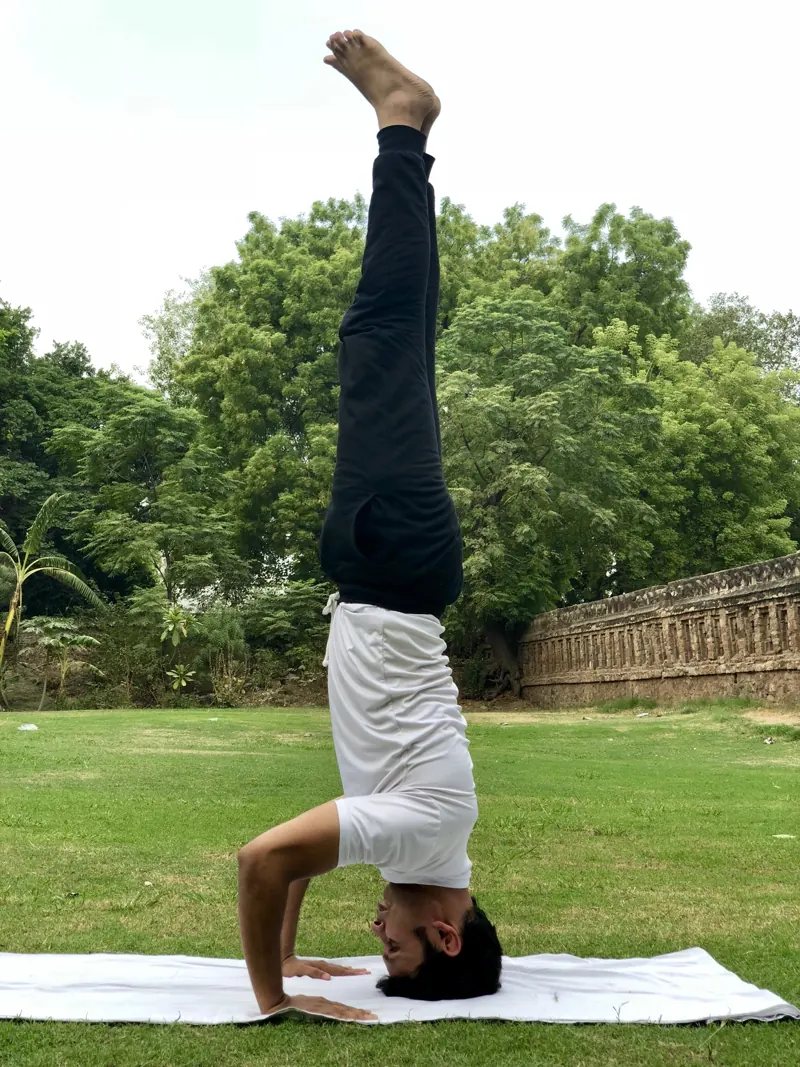
An inversion places the head below the heart and the hips, turning the body upside down from its usual upright position..
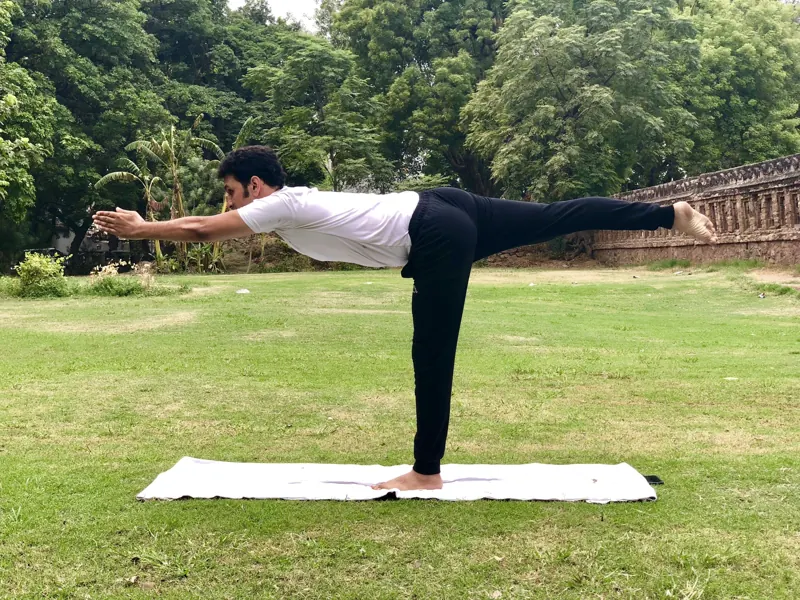
Balancing postures train steadiness of body and attention: one fixed point, one breath, one mind..
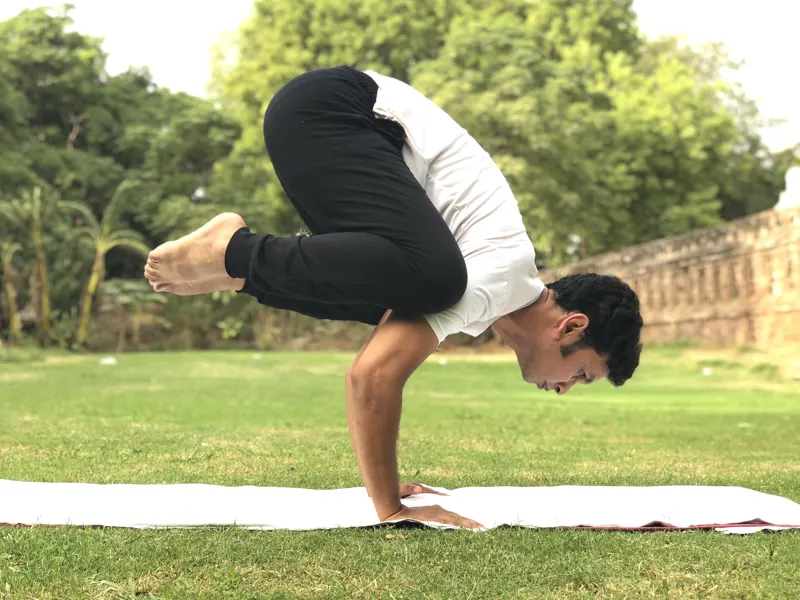
Here the body is carried by the hands or forearms alone: strength, courage and patience..
Prefer email? agastyayogaschool2017@gmail.com