Free trial →
Philosophy the yogic body

What the practice works on.

Before the postures, the tradition describes the body that practises: five elements, five sheaths, five vital breaths. This is the background Acharya Lokesh gives every student.

Panchakosha

The five sheaths.

The human spirit is wrapped in five sheaths, the Panchakosha. Practice moves inward through them, from the body to bliss.

The physical bodyAnnamaya kosha

The gross body, made of food, linked to the earth element. A right diet keeps it strong.

The vital bodyPranamaya kosha

Between body and mind: the body of prana, with its five main pranas and five secondary ones. It works better with the regular practice of pranayama.

The mental bodyManomaya kosha

Mind, intellect and ego (the inner instrument). Purified by regular meditation and right knowledge, it governs the five senses.

The body of wisdomVijnanamaya kosha

Discernment and higher knowledge. The yogi who practises dhyana with discrimination and detachment reaches knowledge full of truth (ritambhara prajna).

The body of blissAnandamaya kosha

The innermost sheath, said to dwell in the cave of the heart, turned towards the inner world. In seedless samadhi the seeker abides in it.

Pancha Mahabhuta

The five great elements.

In the Indian tradition everything, living or not, is made of five great elements, the Pancha Mahabhuta: space, air, fire, water and earth. They also live in the senses: space in hearing, air in touch, fire in sight, water in taste, earth in smell. Knowing them helps bring body and conscious mind into harmony.

Space (ether)Akasha

The spaces and channels of the body through which everything moves: from the throat to the stomach, and every channel of transport in the body.

AirVayu

The element of movement: the muscles, the beating of the heart, the expansion of the lungs, the movement of the intestines and the electrical activity of the nerves.

FireAgni / Tejas

The sun outside, metabolism and digestion inside. Fire also shows as intelligence and vision: body temperature, digestion, thinking and sight are its work.

WaterJala

The juices of digestion, saliva, the mucous membranes, the plasma and the inside of every cell: the water of life. Taste belongs to water.

EarthPrithvi

Everything solid: bones, cartilage, muscles, tendons, skin, nails and hair.
Pancha Prana

The five vital breaths.

Life force is one, but it takes different names according to where it works. Pranayama keeps the pranas and the vital body (pranamaya kosha) clear: that is why this background matters before you start pranayama.

Throat to heartPrana

Breathing and circulation: the nose, throat, voice, lungs and heart.

Below the navelApana

Downward, eliminating movement.

Head and throatUdana

Upward movement: energy and radiance of the face, the senses and the head.

Heart to navelSamana

Balancing movement: digestion and assimilation.

Whole bodyVyana

Pervading movement: it carries energy to every organ, muscle and joint.

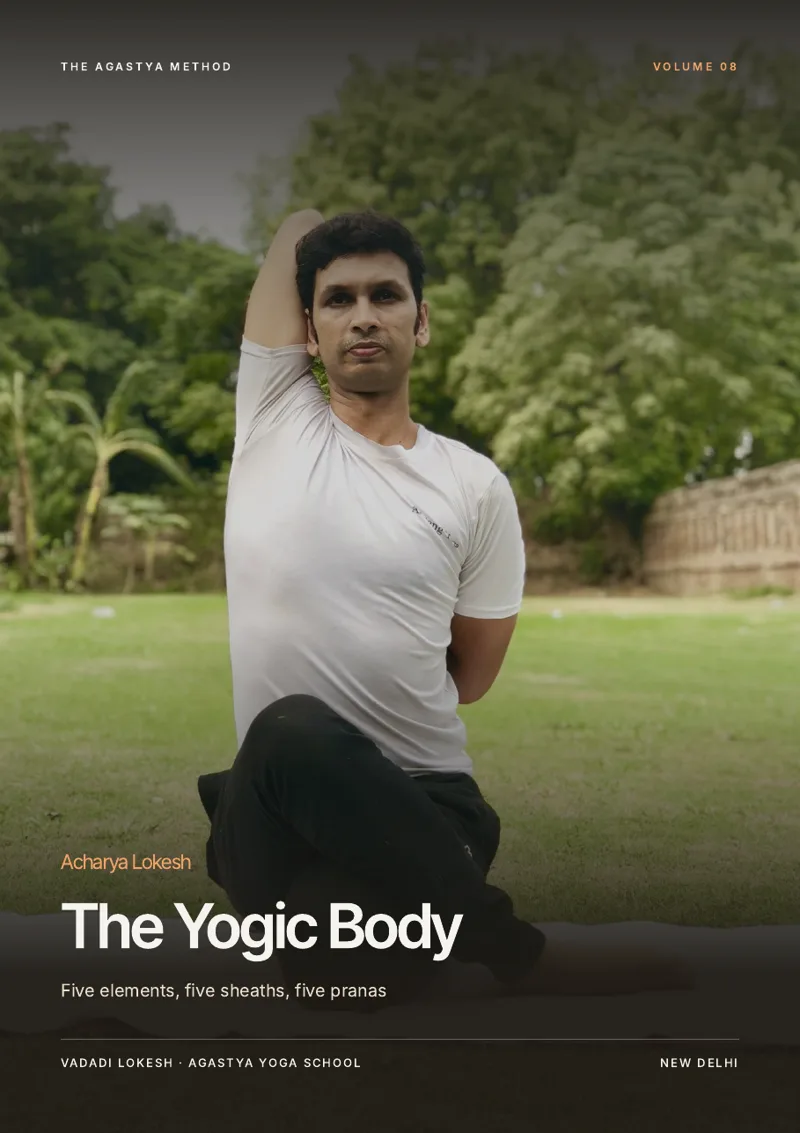
The Yogic Body, PDF guide cover
The Agastya Method · PDF · 9 pages

The Yogic Body

For practitioners who want the philosophy behind the postures: what yoga works on, beyond the muscles.

  • The six obstacles and six helpers of the Hatha Yoga Pradipika
  • Pancha Mahabhuta, Panchakosha and the five pranas, explained simply
  • Written for the YCB Level 2 (intermediate) syllabus, in clear English
$19
+ Cart

Instant download · secure payment by Stripe

WhatsApp