Arm Balances Hand-standing series
Mayurasana
Peacock pose
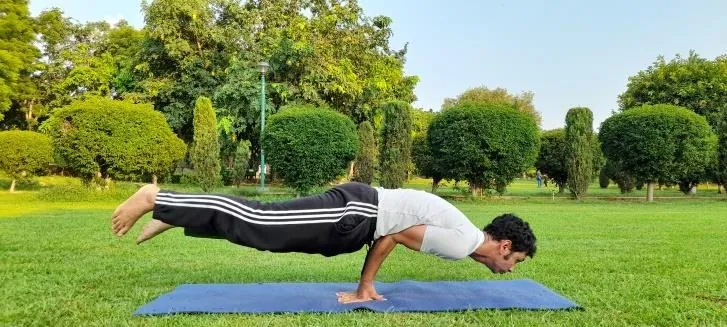
Mayura means "peacock". One of the oldest non-seated asanas of hatha yoga, first described around the 10th century.
FamilyArm Balances
LevelIntermediate (YCB Level 2)
AwarenessManipura chakra
Technique
- Sit in Vajrasana, knees apart, feet together.
- Inhale and place both palms on the floor, fingers pointing towards the feet; bring the wrists and elbows together.
- Exhale and lean forward so that the abdomen rests on the elbows and the chest on the upper arms.
- Keep the balance and slowly stretch the legs back until straight, feet together.
- Lift the toes from the floor, raise the head slightly and gaze ahead at eye level.
- Breathe normally and hold as long as comfortable, without strain.
- Inhale, bring the knees down and sit in Vajrasana.
Awareness
First on the balance and the abdomen; gradually on Manipura chakra.
What it gives
- Strengthens the muscles of the whole body and develops muscular control.
- Develops physical and mental balance.
- In the yogic tradition, a posture of strong digestive fire (agni).
Precautions
- Avoid with high blood pressure, any heart condition, hernia or peptic ulcer, when ill or weak, and during pregnancy.
Learn it with Acharya Lokesh
Intermediate postures are safest when a teacher watches you. Book a free trial session at home in Delhi or online, or take the illustrated guide home.
Text from Acharya Lokesh's handbook Yogasana for Intermediates (Agastya Yoga School, 2022), edited for clarity. General information about a traditional practice, not medical advice: if you have a health condition, are pregnant or recovering from surgery, ask your doctor first.